13975 Connecticut Ave., #208 Silver Spring, MD 20906

How Does a Dental Filling Procedure Work?


Dental restorations are essential for repairing common issues like cavities and minor damage and for preserving oral health. Ever wondered what happens when you get a tooth filling? It’s a simple yet crucial procedure that restores damaged teeth and prevents further decay.
Read this blog to understand how this restorative treatment gives you a stronger, healthier tooth. Let’s break down the dental filling procedure so you know exactly what to expect during your next visit!
Types of Dental Fillings
Amalgam restorations: Also known as silver fillings, amalgam restorations are preferred for their extraordinary longevity. These restorations, which comprise copper, tin, silver, and mercury, are perfect for molars that can withstand much chewing pressure. Some tooth structures may need to be removed to prepare the cavity for this surgery.
Composite Restorations: Composite materials are frequently chosen for decaying teeth because of their natural appearance. They closely resemble actual teeth in color and are made of plastic resin and finely ground glass particles. Your dentist binds this material directly to the structure as it requires minimal tooth removal for the final restoration.
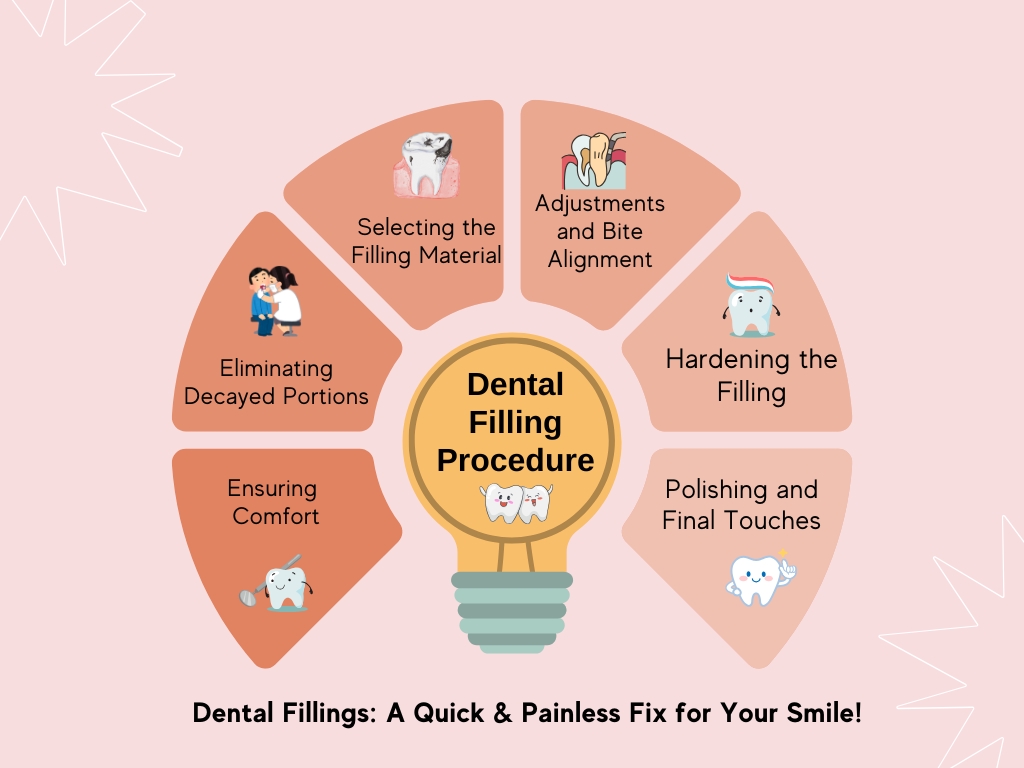
Step-by-Step Restoration with Filling Material
The first step is a comprehensive oral examination to evaluate the degree of damage and choose the best filling material. Before placing the final fillings, your dentist could offer a temporary restoration to shield the damaged area.
Ensuring Comfort
A benzocaine-containing pre-numbing gel is used to improve patient comfort before administering a local anesthetic injection. This lessens the discomfort of administering the anesthesia. The filling process starts when the tooth and surrounding tissues are sufficiently numb.
Eliminating Decayed Portions
With specialized technology, decay can be readily eliminated as brown or black areas. The application of a caries indicator guarantees total eradication of infected portions.
Selecting the Filling Material
Amalgam and composite are the most popular dental fillings in Silver Spring. After removing the cavities, your dentist may choose any filling material, considering durability and appearance.
Placing the Restoration
Layers of the filling material are inserted into the cavity to ensure a void-free fit. The use of composite materials simplifies the veneer procedure while maintaining strength.
Adjustments and Bite Alignment
After the repair, the bite is carefully adjusted to avoid pain during chewing. Your practitioner may use articulating paper to locate high spots and smooth them out to give you a balanced bite.
Polishing and Final Touches
The final step involves polishing the restoration for a smooth and glossy finish. This enhances smile aesthetics but ensures a comfortable feel against the tongue and surrounding teeth.
Dental fillings offer a reliable and safe way to address cavities and developmental defects. For further guidance on the filing materials or procedural details, visit Maryland Dental Specialty Group. We offer a wide range of treatments to ensure optimal oral health and longevity of your dental restoration.
Summary
Dental fillings are essential for repairing cavities and minor tooth damage. The procedure involves a thorough examination, numbing the area, removing decay, and filling the cavity with materials like amalgam or composite. The filling is then shaped, polished, and adjusted for a comfortable bite. This restores tooth function, prevents further decay, and maintains oral health.
Visit us at Maryland Dental Specialty Group for expert dental fillings and comprehensive oral care.